
Adventure
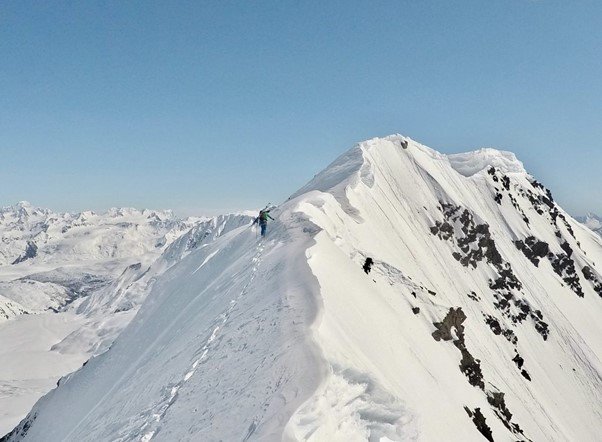
Backcountry Skiing in Alaska’s Chugach Mountains is an adventure for legends; it offers endless glaciers, wild terrain, and the kind of untouched solitude that pulls skiers like me from all over the world to experience the magic of the Chugach Mountains. Me and my team were prepared for an adventure like we always do, but what we experienced in the ridges and bowls of Chugach was magical.
How does it feel to step off a plane and watch it disappear into the distance, leaving you and your partners alone on a massive glacier? My tour guide was Skip, a highly sensation-seeking guy with a thrill for adventure and conquering new heights. A master of the Chugach’s rewarding and scary landscapes, he guided me and my tour group’s wild adventures perfectly.
Our group was a mix you rarely get: a bunch of strong, ambitious skiers who were talking about ten thousand vertical days like it was a walk in the park, another group of mid-tier skiers who believe the sky is the limit while still perfecting their skinning technique. And of course, there is always that single honest person in the group who tells you upfront that they have never skied true big mountain terrain before. My skiing guide took it all in, poor guy. He had a lot of amateur skiers to deal with.
There is always something for everyone, whatever the level of skiing. If you ask Alaska for a big day, expect these mountains to deliver. Just get ready.
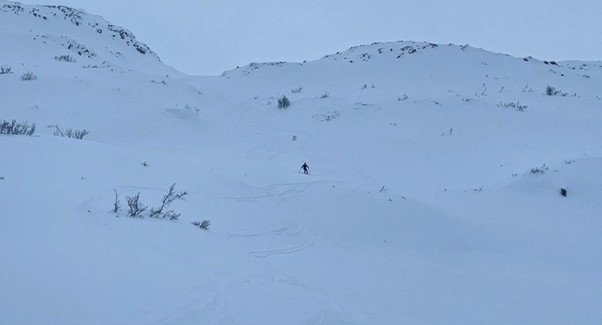
While skiing the Chugach, don’t be afraid to explore the unknown; the Tiekel Valley area is one of the least known, most remote terrain and snowpack region of the central Chugach Mountains. It not only provides incredible adventure for those seeking wilderness backcountry skiing, but it was perfect for snowboarding and ski mountaineering experience. Our rookie skiing team member kept falling after every 10 minutes, and it was always a good laugh among the group.
Few adventurers visit the Tiekel region, so it’s a relatively empty and quiet part of the mountain, and according to our tour guide Skip, it remains so even in the spring when people from all over the globe come to ski and ride on the Thompson Pass.
We very much loved the Tiekel region; despite being the coldest and driest part of the Chugach Mountains, when it is snowing in the Valdez and Thompson Pass zones, it is not in this part of the Valley. It is thus the best place to visit for visibility and the lowest density powder.
Although the terrain of the Tiekel region was the least glaciated and least complex, it offered the most challenging snowpack.
My next favourite part of the mountain was the Portage area, a relatively neglected place just like the Tiekel region. Neither of these areas appealed to the “powder snobs” of the teams, but their terrain and bigness more than compensate for adventurers in search of more than “boring powder”. Skiing and climbing around Portage offers a truly magnificent Alaskan big-mountain experience.
The Portage area gets a lot of weather; it has “character-building” snow, and access is from near sea level (with the lower elevations remaining relatively brown and snow-free some seasons). The terrain was a bit heavily glaciated and relatively big and complex compared to neighbouring Turnagain pass. These factors make the Portage area empty as compared to the crowded Turnagain.
Ice climbing and skiing prominent peaks (Middle Glacier and Explorer) on the south side of the Portage Valley is quite phenomenal. With stable avalanche conditions, non-motorized travel to the Skookum Glacier via Portage Valley is faster than motorized access from the Placer.
The Chugach Mountains hold a special place in many backcountry skiers’ and ski alpinists’ hearts. I found the snow climate of the western Chugach unique and highly variable from season to season and from one valley to the next. It typically has a deep maritime (sort of coastal) snowpack to the south near Girdwood (in America’s northernmost temperate rainforest), but the deceptive snow depth and coverage closer to Anchorage (due to being on the windy, downsloped, rain shadow side of the Chugach) give it more interior, continental snowpack characteristics. These snowpack characteristics gave the “Front Range” of Chugach State Park, right above Anchorage, a notorious reputation for being enigmatic and also interesting.
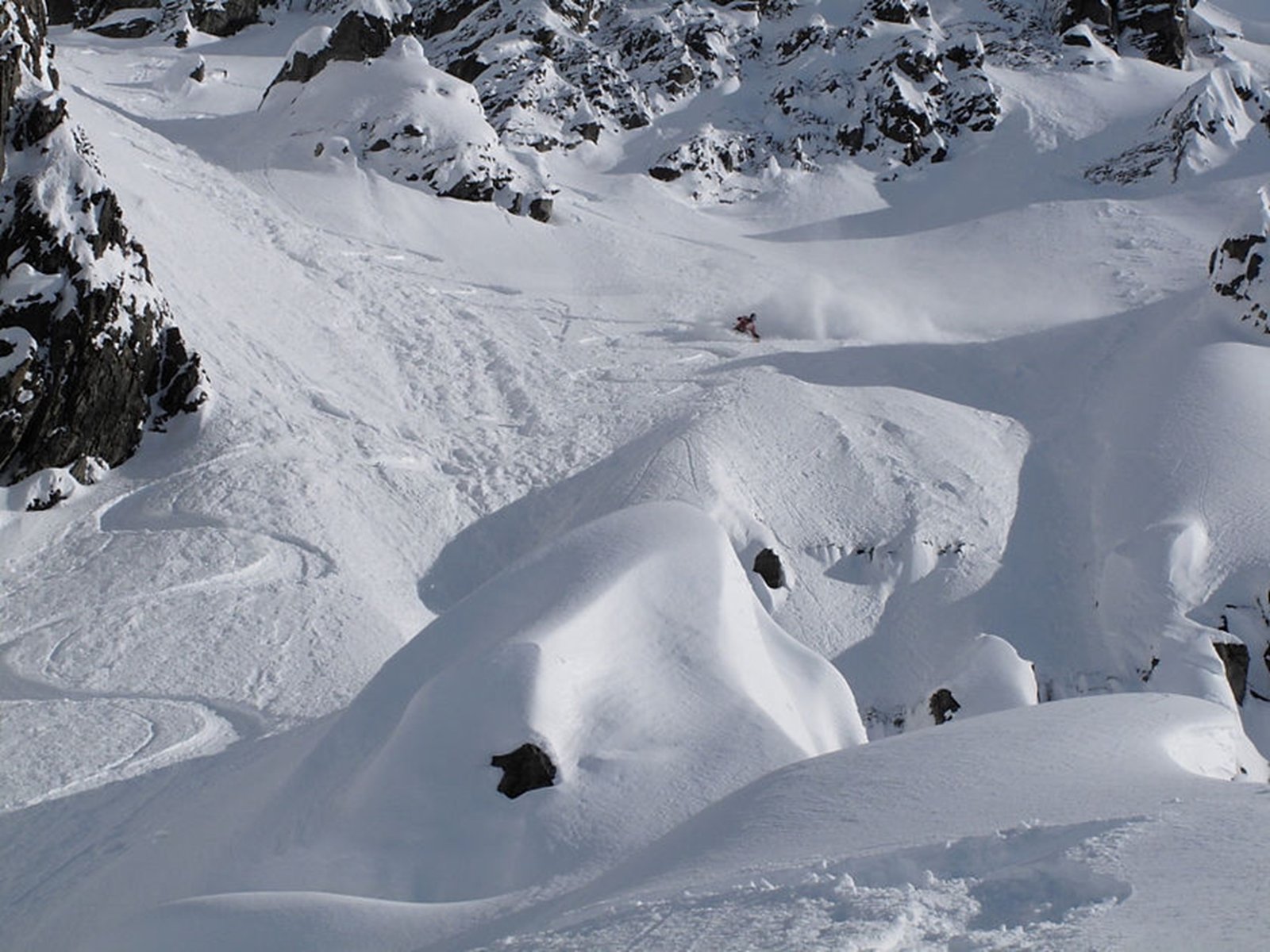
Why not choose the Chugach Mountains for your next Skiing adventure? I had a blast with the team and would suggest you put Chugach Mountain on your bucket list for the next skiing adventure; whereas the snow here is often cold and dry, it offers excellent conditions for both backcountry skiing and heli-skiing unlike any other place I have tried before. The diverse terrain ranges from wide-open bowls to steep couloirs, which is fit for for all level or skiers within the team. The unique combination of wilderness and untouched landscapes offered us a sense of adventure we could not find anywhere else.
Ice climbing and skiing prominent peaks (Middle Glacier and Explorer) on the south side of the Portage Valley is quite phenomenal. With stable avalanche conditions, non-motorized travel to the Skookum Glacier via Portage Valley is faster than motorized access from the Placer.
It not only provides incredible adventure for those seeking wilderness backcountry skiing, but it was perfect for snowboarding and ski mountaineering experience. Our rookie skiing team member kept falling after every 10 minutes, and it was always a good laugh among the group.
It’s far more difficult to find a bad view here. Everything is spectacular!
Safety Tip: Alaska’s backcountry terrain is avalanche terrain. Every slope steeper than 30 degrees can avalanche under the right conditions, and the Chugach snowpack, which is characterized by persistent weak layers from temperature fluctuations, is more hazardous than many continental snowpacks.
Our tour guide Skip considered the three pieces of equipment mandatory for every backcountry tour to be an avalanche beacon (transceiver), a probe pole, and a collapsible shovel. These three items exist for your survival and will help you skiing danger-free, their role is to find and unbury group members after a burial; without them, avalanche survival depends on luck alone.
No reviews yet. Be the first to write a review.
Write a Review