
Adventure
Whether you’re just visiting Alaska for the first time or you’ve lived here for years, you probably know at least this: there are plenty of fish here. But do you know where many of those fish come from? If you’re fishing for Chinook or Coho salmon in a stream in the Anchorage bowl, or rainbow trout in a lake on the Seward peninsula, or arctic char in a lake near Talkeetna, there’s a good chance those fish came from the same place: a hatchery located just two miles from downtown Anchorage.
The William Jack Hernandez Sportfish Hatchery, operated by the Alaska Department of Fish & Game, is the largest indoor facility of its kind in North America. It exists to reduce the pressure of sportfishing on wild stocks while providing recreational anglers with opportunities to fish in freshwater systems throughout Southcentral Alaska. The hatchery releases four million fish into lakes and streams each year.
If you want to see what an operation like this looks like, you’re in luck: the Ship Creek Fisheries Center located inside the hatchery is open to the public year round for free self-guided or guided tours.
If you’re not into fishing and you’re wondering why you should care about seeing a fish hatchery, I’ll tell you a secret: I’m not a fisherman either. But I’ve worked in a salmon hatchery on the Prince William Sound, and the truth is that hatcheries are weird and wonderful operations run by weird and wonderful people. It’s worth it to poke your head in and see the dedication and ingenuity required to raise millions of fish a year.
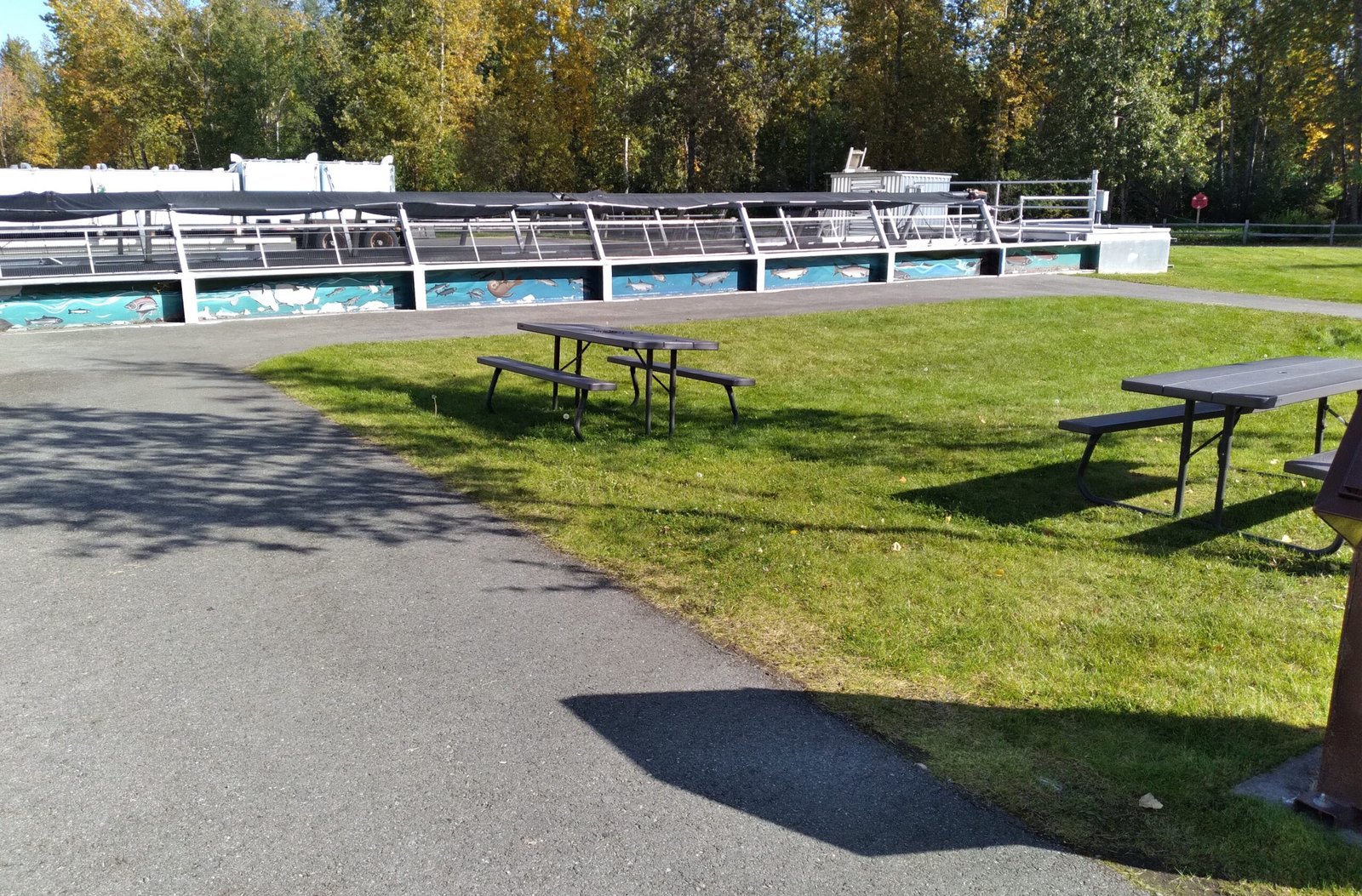
The Hernandez hatchery is accessible via the Ship Creek trail (it’s also a stop on the Anchorage Audubon trail) two miles from downtown. If you’re looking to make an afternoon of it, there’s a picnic area which sits next to raceways stocked with rainbow trout May through June.
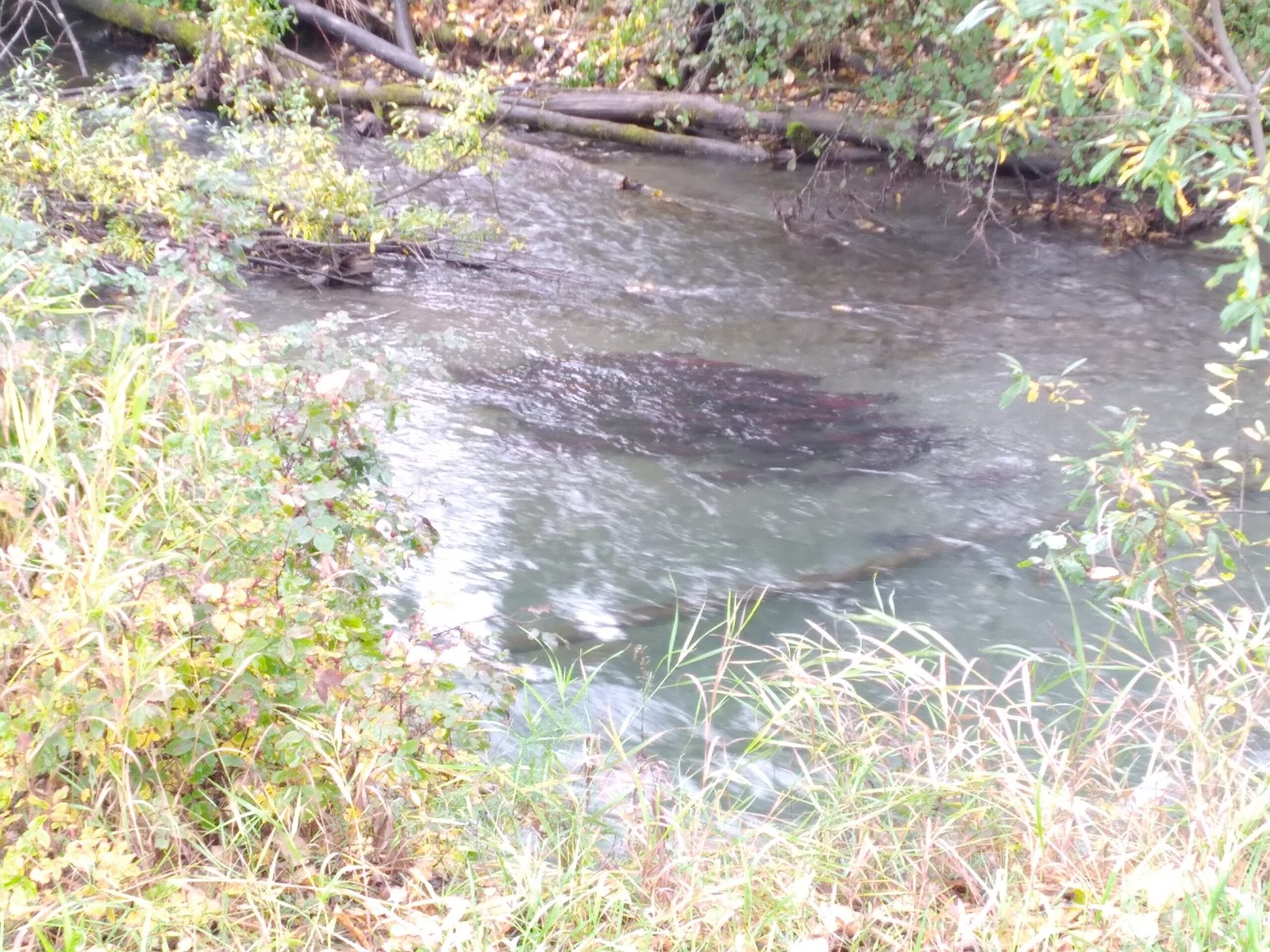
The cyclical nature of work at the hatchery means there is always something to see inside and out. On an overcast Saturday afternoon in September, I saw abundant Coho salmon in Ship Creek, where the free tour begins. My tour guide, Greg Behler, told me fish can be seen in the stream May through October. Chinook Salmon are the early comers, spawning in June, then Cohos in September. Greg explained that rainy, overcast days are good for seeing more fish in the streams.
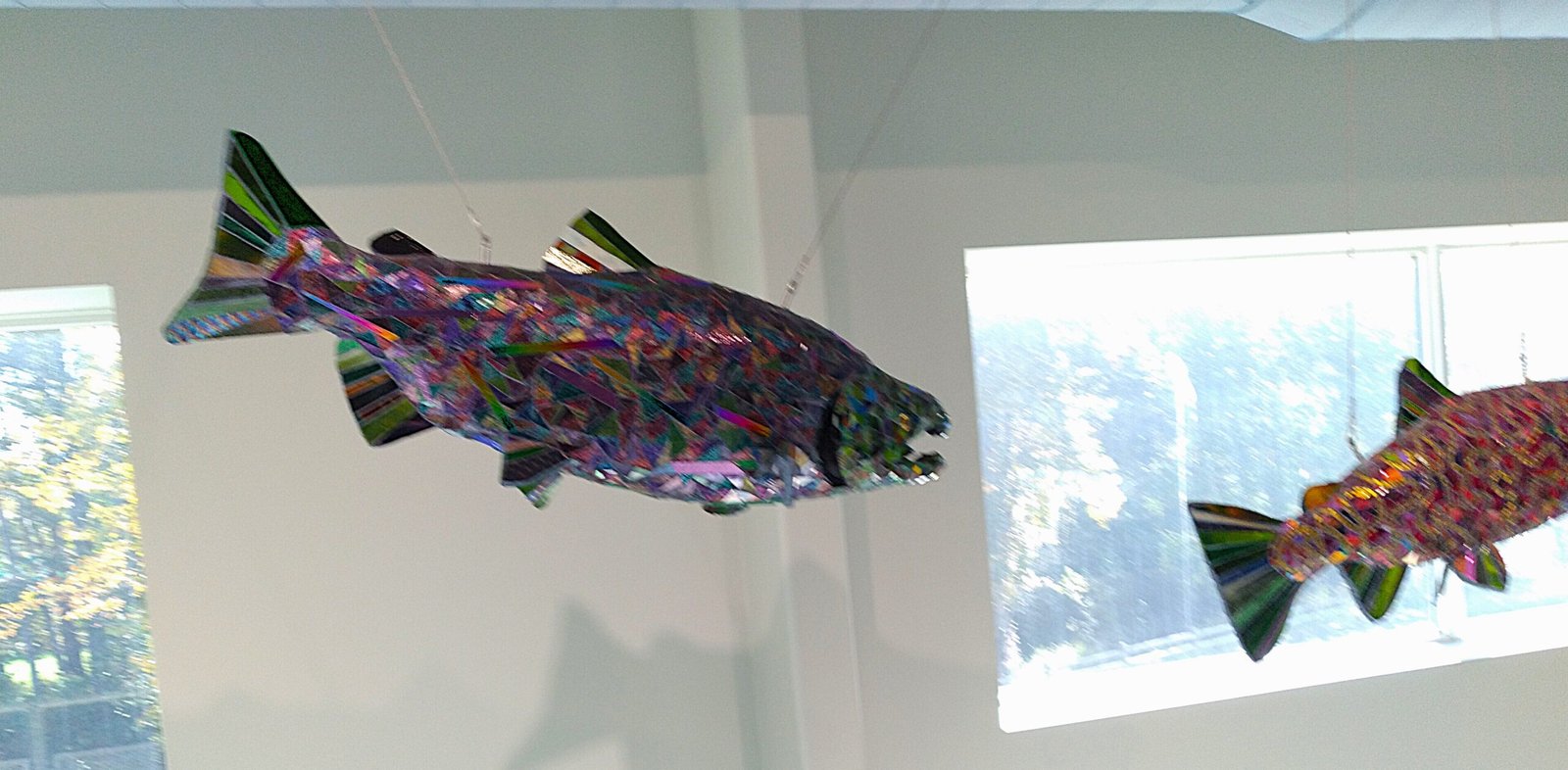
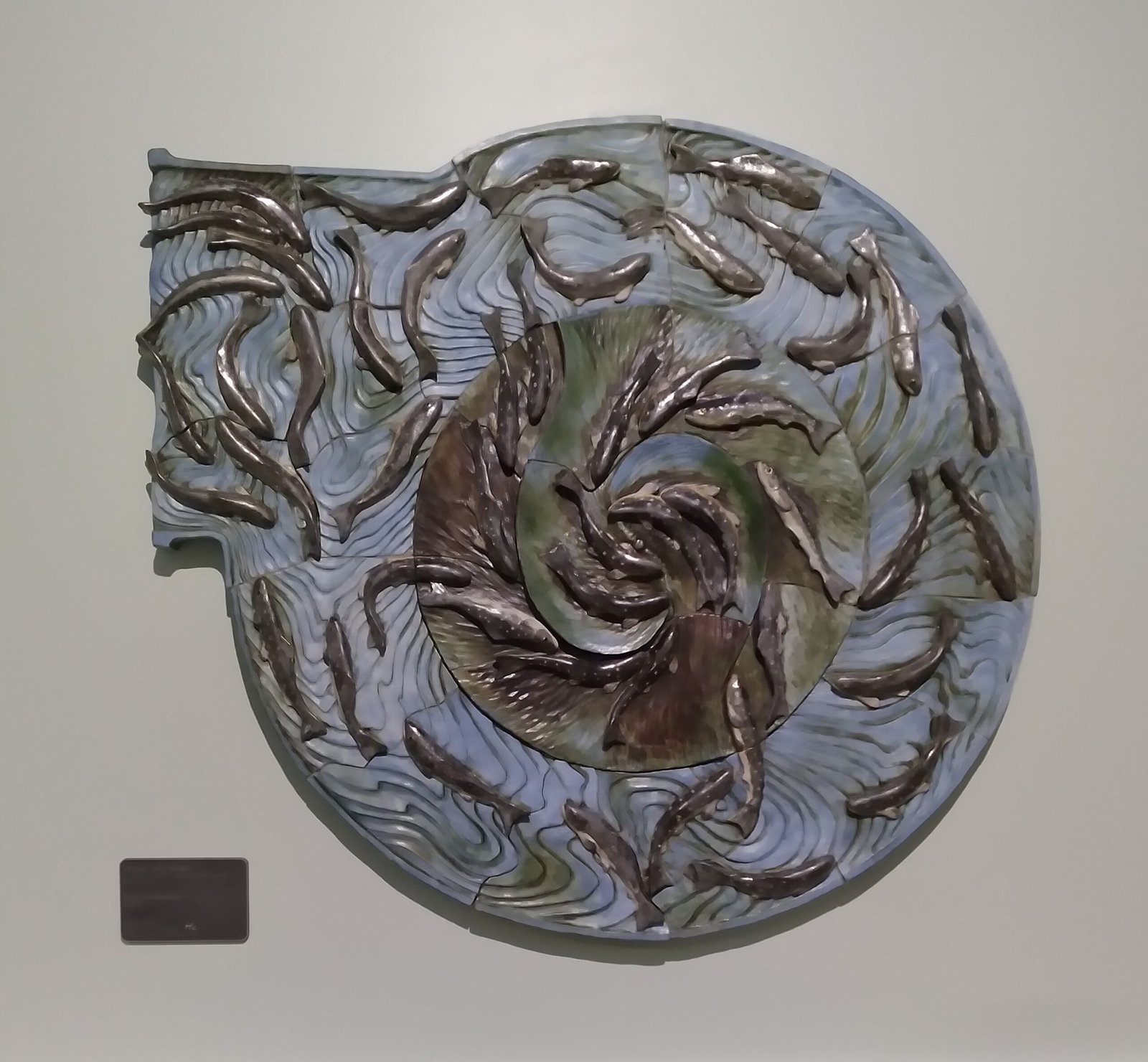
The building itself is filled with original artworks, including several pieces by the iconic Alaskan artist Ray Troll on the exterior. Hanging above the stairs as you enter the building is a school of salmon sculptures bedecked in shards of stained glass. Proceeding through the Center, artistic depictions of the life cycle of salmon adorn the walls between abundant informational placards.
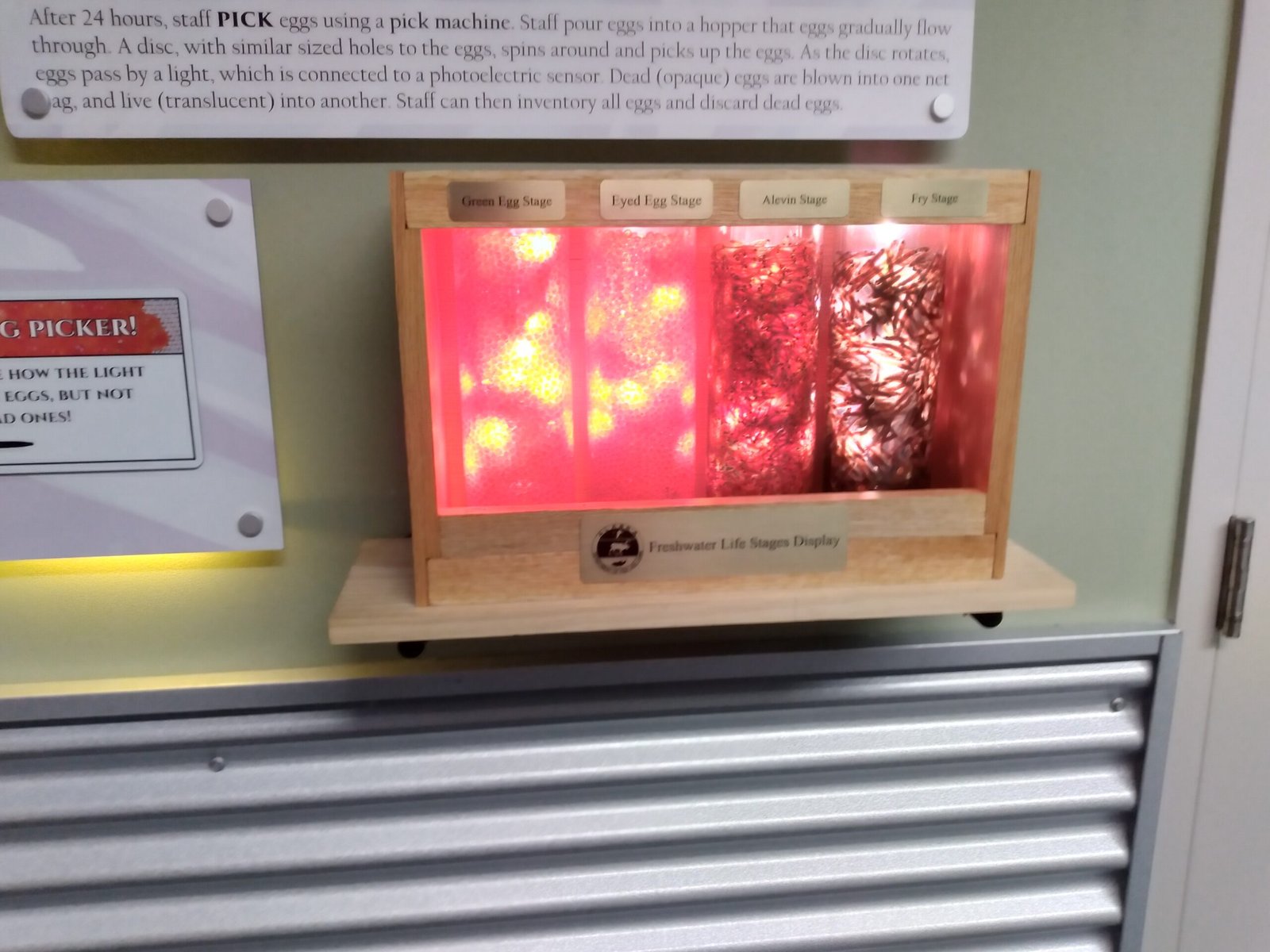
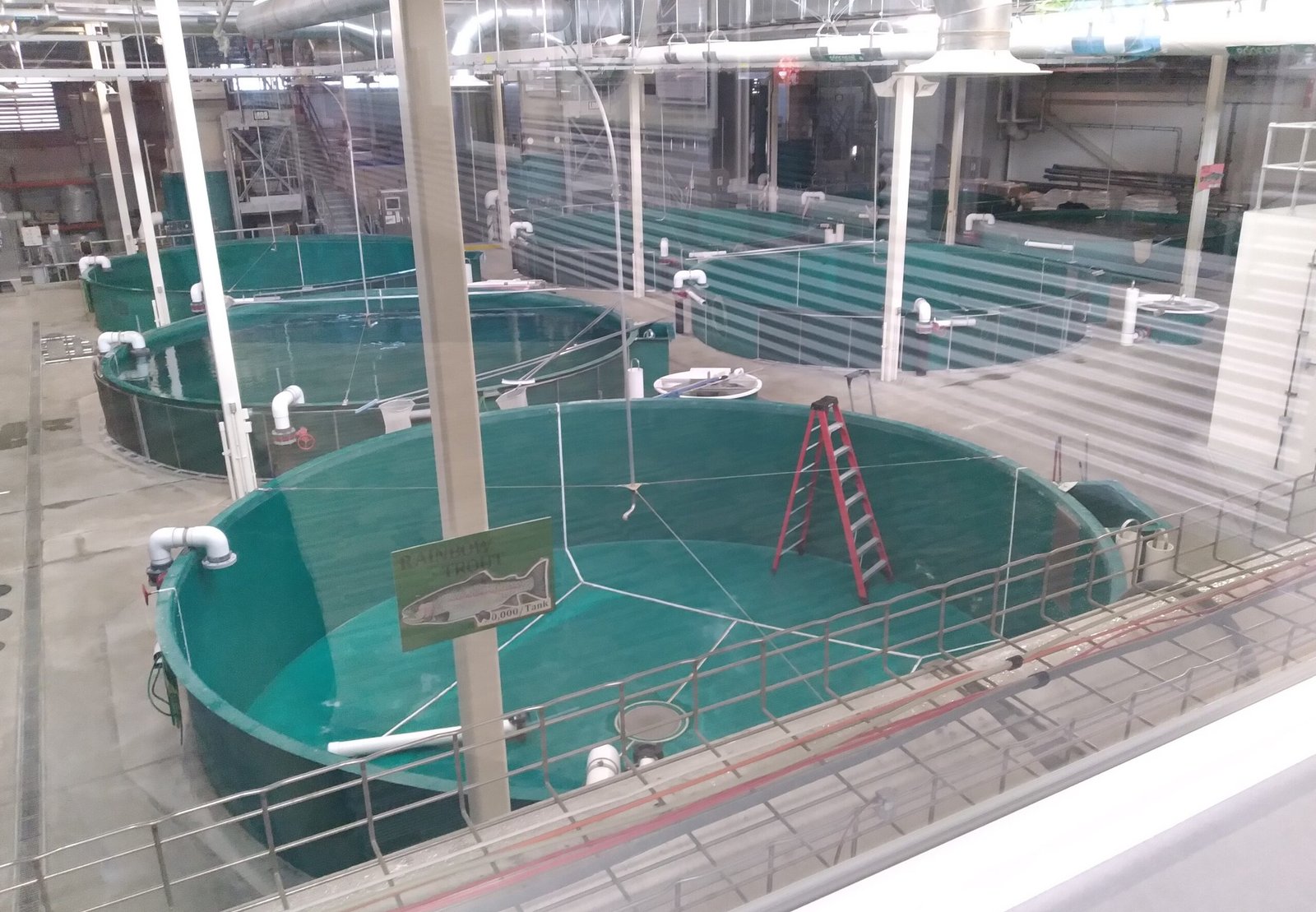
Looking through viewing windows, I looked down on huge rearing tanks teeming with Rainbow Trout and Arctic Char. In other areas, tanks sat empty, awaiting fish which will occupy them at different points in the year. In the egg room—capable of incubating about 4 million eggs—fertilized coho eggs stood in towers bathed in red light.
The typical guided tour lasts 45 minutes to an hour, but if you care to meander through and read as much of the placards as you can, rich with information about the history of the hatchery, fisheries in Alaska, and the life cycles of the fish being reared, you could easily spend several hours there. On an unguided tour, staff may still be present to answer questions.
The hatchery is federally funded through an excise tax on fishing equipment and by sportfishing licenses, but a nonprofit partner of the Alaska Department of Fish and Game—The Alaska Outdoor Heritage Foundation—takes donations which go directly to building new displays and interactive experiences at the hatchery.
If touring the hatchery gives you a sudden and unexpected urge to go fishing but alas! you have no rod, fear not: the ADF&G has a rod loan program, available at participating ADF&G offices—including Anchorage, Soldotna, and Homer—wherein licensed fishermen can borrow rods for up to 3 days free of charge.
The Ship Creek Fisheries center sees around twenty thousand visitors a year, but my tour guide Greg said he’d like to see more Alaska residents visit the center. He says few seem to know it’s here, and more significantly, few people understand that almost all freshwater sportfish in Southcentral Alaska come from this hatchery. The hatchery exists to create fishing opportunities for anglers, and its extremely dedicated full-time staff of 9 work 24/7/365 to run the facility and stock fish throughout the region. In some cases, Greg told me, staff must hike fish in to stock them where no other method is possible.
It’s free, it’s family-friendly, it’s accessible. Go check it out. I guarantee you’ll learn something new, and you’ll probably see something weird and a little gross along the way.
Learn more about the hatchery here
Schedule a guided tour here
Tour begins here. Chinook and Coho salmon can be seen in the stream May through October.
Salmon sculptures hang above the stairs as you enter. Other artworks are placed throughout the building.
This is where fish can be seen. Depending on time of year, you may be able to see Chinook, Coho, rainbow trout, and/or arctic char.
This is a pretty easy outing from the downtown Anchorage area. If you’re only in town for the day and plan on checking out some of the museums, add this to the list.
No reviews yet. Be the first to write a review.
Write a Review