
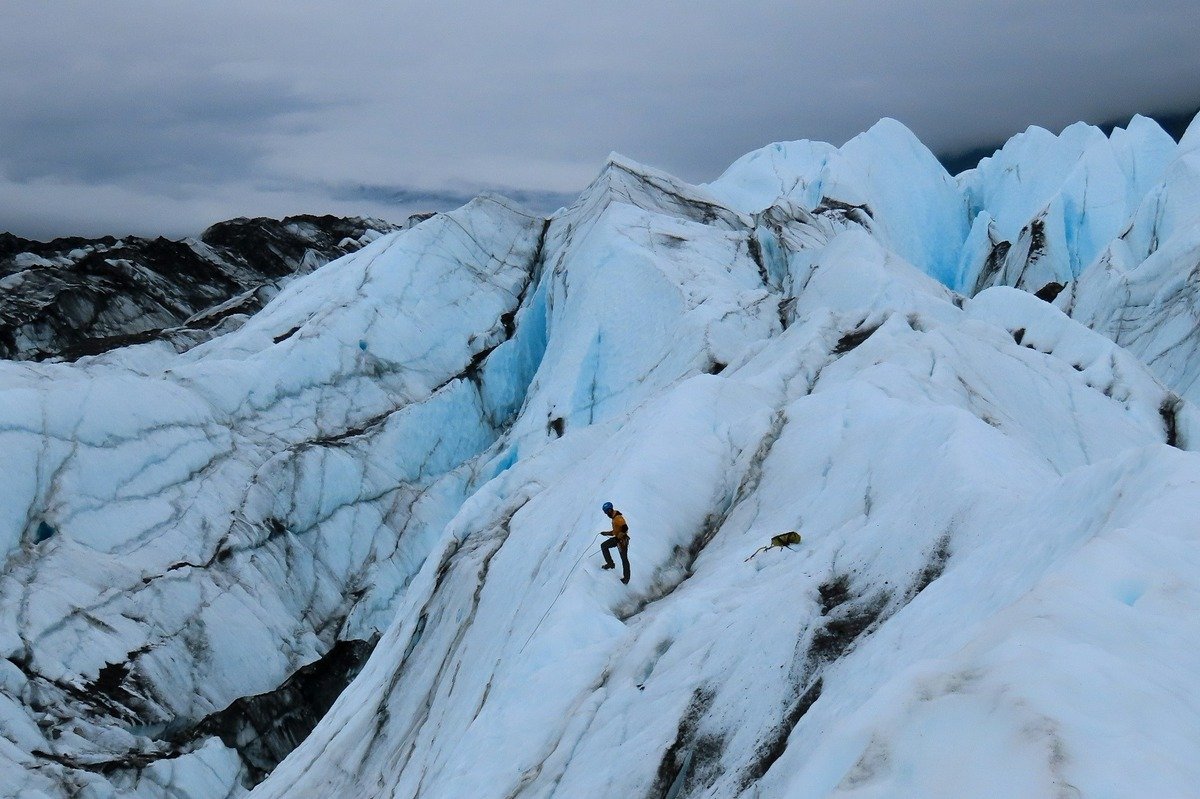
Most people get into Alaska mountaineering through hiking. You climb enough steep trails, start looking at the snow above them, and eventually want to know what it takes to get up there.
The honest answer starts with self-assessment. Mountaineering takes you beyond the trail and onto steep snow, ice, and crevassed glaciers, often with rope systems and everything you need carried on your back. In Alaska, several of those hazards can appear on the same route.
What Makes Alaska Mountaineering Different From Hard Hiking?
Difficulty here is not just about effort. It is about how many things can go wrong at once. A route may cross a glacier, pass beneath avalanche terrain, lie far from a road, and depend on a small plane for access. Weather can close both the way in and the way out. Cold and altitude can affect judgment, too.
That is why Denali sits at the end of a learning progression, not the start. According to the National Park Service, teams should already have completed numerous ascents of glaciated peaks and have experience with glacier travel, crevasse rescue, route-finding, expedition camping, extreme cold, and altitude.
If you are still working through trail objectives, start with our Alaska hiking guide for every skill level.
Where Should a Beginner Start?
Beginner mountaineering in Alaska does not mean finding an easier version of Denali. It means learning how to move through mountain terrain in places where fewer risks overlap. The safest way to progress is to add one new challenge at a time.
You can work through our adventure categories by skill level in roughly this order.
Foundation Stage
Build uphill endurance, balance, scrambling, navigation, layering, and sound decision-making on non-glaciated terrain with dependable access. Flattop and Bird Ridge in Chugach State Park can serve as serious conditioning objectives, but neither should be treated as a casual walk.
Snow-Travel Stage
Learn to move on firm snow, assess runout zones, use traction properly, arrest a slide, recognize cornices, and interpret avalanche information.
Glacier Stage
Add roped travel, crevasse rescue, snow anchors, probing, whiteout navigation, and clear team communication. These skills need hands-on practice before you rely on them in exposed terrain.
Expedition Stage
Combine those skills with winter camping, load hauling, stove repair, food and fuel planning, acclimatization, and the patience to wait out bad weather.
How Do You Choose an Objective by Hazard Instead of Reputation?
Grades and elevation can mislead. When comparing Alaska mountaineering routes, ask whether the route is glaciated, crosses avalanche terrain, includes exposed climbing, allows a quick retreat, depends on aircraft, or lies far from help.
Easy access is not the same as safety. The Bureau of Land Management warns that Castner Glacier can bring extreme winds, changing water levels, rockfall, active glacier hazards, and fast-moving weather. Anyone leaving the highway corridor should have backcountry experience.
Route information also expires. For the 2026 season, the Park Service advises against the Muldrow Glacier route after a glacier surge left the lower icefall appearing impassable. Recent Alaska trip reports can show what climbers encountered, but check them against agency alerts, forecasts, and the relevant land manager.
Permits also depend on the land manager. Denali and Mount Foraker climbers must register at least 60 days before departure, pay the current fee, and attend an orientation in Talkeetna. Other objectives may fall under the Forest Service, BLM, Alaska State Parks, or private landowners.
What Do Weather, Snow, and Glacier Conditions Decide for You?
Conditions set the schedule. Your calendar should not.
There is no single best month for Alaska mountaineering. Coastal ranges, the Alaska Range, the Interior, and volcanic regions all behave differently, and conditions higher up may look nothing like those at the trailhead. The Park Service links to a Denali climbing forecast during the May-to-July season. Longer-range outlooks can help with Alaska backcountry trip planning, but they cannot tell you what summit day will bring.
Build weather days into the itinerary and agree on turnaround times before leaving camp. A booked flight or fixed return date is not a reason to keep moving.
Avalanche coverage is regional, and no forecast does not mean no danger. The Forest Service warns that large cornices and avalanche conditions can persist into summer around Byron Glacier Valley.
Glaciers change constantly. Hidden crevasses, weak snow bridges, icefall collapse, rockfall, meltwater, and changing access are normal hazards. Roadside access does not make glacier travel hiking. Crevassed terrain requires trained partners, the right rope system, and the ability to perform a rescue.
What Happens When Something Goes Wrong Up There?
An SOS button sends a request. It does not summon a helicopter.
Wind, visibility, altitude, terrain, and objective hazards can keep rescuers from reaching you, and rescue decisions weigh rescuer safety first. Your party needs to be able to stabilize an injured member, shelter in place, communicate clearly, and self-rescue where possible.
People die on these mountains. The preliminary 2026 Denali season report logged 976 registered climbers, 582 summits, 28 helicopter search-and-rescue operations, five fatalities, seven cases of HAPE or HACE, and five severe frostbite cases. A 60 percent summit rate and that casualty list describe the same season.
Treat altitude and cold as operational problems. According to Park Service medical guidance, sleeping elevation should rise by no more than about 1,600 feet per day with a rest day every three to four days, and HACE or HAPE calls for immediate descent. Frostbite prevention starts before tissue freezes: hold core temperature, cover skin, avoid restrictive boots and clothing, manage sweat, and respond to numbness rather than tolerating it.
Permits depend on the land manager. Climbers on Denali and Mount Foraker must register at least 60 days out, pay the fee, and attend an in-person orientation in Talkeetna. The 2026 fee is $450, or $350 for climbers 24 and under, plus park entrance, with a seasonal cap of 1,500 climbers between April 1 and August 1. Other peaks fall under the Forest Service, BLM, state parks, or private landowners.
Where Are You Headed Next?
Use a simple readiness test: Your next objective should rely mostly on skills you already have and introduce no more than one or two new challenges. If it adds four, it is probably not your next climb.
If you already spend time mountaineering in Alaska, post a trip report to Launch Point so others can learn from what you encountered. If you are still planning, see what climbers found last June or find someone heading the same way.