
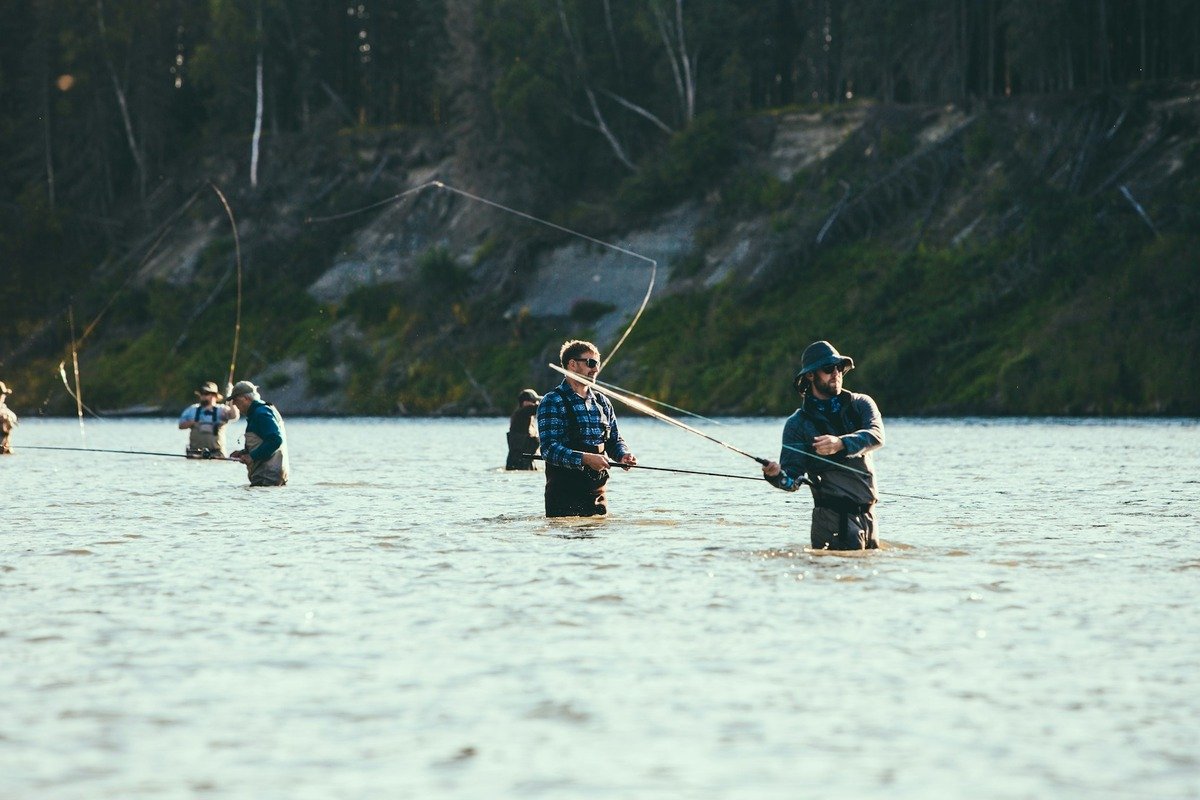
Many Alaska fishing trips are planned in the wrong order. You read about a famous river, book the week your work can spare, and only later find out what’s swimming through it then.
Start with the fish and work outward. Decide what you want to catch, find out when and where it runs, then choose how you’ll get there. Check the regulations before booking and again before you fish, since they can change. By the end, you should know not only how to plan the trip, but whether it’s right for you at all.
What Kind of Fishing Trip Are You Planning?
Before you look at a map, work out what the group wants from the week. Is the goal a particular fish, a remote country, a freezer full of fillets, or fishing wrapped around wildlife viewing?
Then consider how much comfort everyone expects. Someone happy to wade a gravel bar may not be equally keen on climbing into a floatplane or staying miles from the nearest town.
Rank the priorities early: the experience you can’t go home without, the species you’d prefer, and the most you’re willing to spend. The best Alaska fishing trips also leave room for plans to change. Fish do not follow an exact schedule, while weather or new regulations can rule out the first choice. That is why it makes sense to plan an Alaska trip around the fishing season rather than choosing dates first.
What Do You Want to Catch, and Where?
Salmon
All five Pacific salmon species are found in Alaska, but each produces a different trip. Kings are the trophy many visitors picture, although fishing for them is often tightly managed. Sockeye arrive in concentrated runs and can deliver fast action when your dates line up.
Halibut and Other Saltwater Species
Most of Alaska’s sport halibut harvest comes from Southeast and Southcentral Alaska. Reaching productive water usually requires a seaworthy boat, which is why many visitors book charters. ADF&G estimates that charter anglers account for roughly 60 to 70 percent of the sport halibut harvest.
Trout, Char, and Grayling
Bristol Bay offers rainbow trout, char, grayling, and pike alongside salmon. For grayling, pike, or burbot, look toward the Interior, where many major grayling fisheries are accessible from the road system.
Match the Region to the Fish
Southcentral combines road, boat, and air access, giving anglers alternatives when conditions change. That flexibility makes fishing in Southcentral Alaska practical for first-time visitors. Southeast leans toward marine fishing. Access matters early in Bristol Bay fishing trip planning, since many fisheries require a lodge stay or fly-in transfer.
When Does Your Fish Actually Show Up?
A summer visit isn’t a plan on its own. Runs occur in specific waters during particular weeks. One species may be entering tidewater while another is already spawning upstream, and some rivers have separate early and late runs.
ADF&G’s Alaska salmon run timing charts show when fish are normally available, but they don’t confirm that the water is legally open. Choose your species, compare its window across two or three regions, check the current regulations, and select dates that leave you a second option.
Climate Prediction Center outlooks can show broad weather patterns months ahead. Closer to departure, check ADF&G fishing reports and fish counts, then use member trip reports from the same water for added local context.
Road, Lodge, or Fly-In: How Remote Do You Want to Go?
Road-Based Trips
Driving gives you flexibility because changing rivers may cost an hour rather than a rebooked flight. Popular fisheries can be crowded, however. The Russian River receives roughly 150,000 summer visitors but has only 130 day-use parking spaces. Remember that road access does not necessarily permit you to cross the land beside the water.
Lodge-Based Trips
A full-service lodge may coordinate accommodation, boats, guides, meals, and fish processing. Ask whether fishing is guided every day, how many anglers share each guide, and what happens when the weather changes the plan.
Fly-In Trips and Public Cabins
Flying opens access to remote water but makes the trip more dependent on weather. Alaska State Parks maintains more than 80 public-use cabins, most reached by trail, boat, floatplane, or wheel plane rather than by road.
What Should You Check Before You Pay Anyone?
Alaska fishing guide registration must be renewed every year. ADF&G also requires sport-fishing businesses and guide vessels to register annually. Operators working on National Forest System land or water need a Forest Service special-use permit as well.
Anglers remain responsible for licensing. Residents 18 and older and nonresidents 16 and older generally need a sport-fishing license. Targeting king salmon usually requires a king salmon stamp.
Before leaving, check the statewide regulations, the rules for your drainage, and any emergency orders. Those orders are binding and can change seasons, limits, or fishing methods. In 2026, ADF&G closed Upper Cook Inlet north of Bluff Point to king salmon fishing, including catch-and-release, from May 1 through August 15. That is why Alaska fishing trips need rechecking before departure.
Finally, budget door-to-door, including bush flights, transfers, fish processing, and a buffer night.
How Could Weather, Water, and Bears Change Your Plan?
Weather and water conditions should shape Alaska fishing trips. The National Weather Service issues coastal forecasts and small-craft advisories. In Alaska, an advisory may begin with sustained winds or frequent gusts of 23 to 33 knots.
Heavy rain can raise rivers and make wading unsafe, so check the Alaska-Pacific River Forecast Center and nearby USGS streamgages before heading out. Volcanic ash can also disrupt flights far from its source. If the itinerary includes several flights, monitor the Alaska Volcano Observatory.
Cold water remains dangerous even for strong swimmers. Wear a life jacket, dress for rain and wind rather than the forecast high, and decide how the group will communicate outside cellular coverage.
Bears are drawn to the same salmon streams as anglers. Stop fishing when one approaches, avoid letting a hooked fish splash, and surrender the spot rather than compete for it. At Brooks River in Katmai, fishing must stop when a bear comes within 50 yards, with no line left in the water. That rule is location-specific, so always check the requirements for the water you plan to fish.
Where Are You Fishing Next?
The sequence is species, window, region, access, rules, and a buffer day. That is why the best Alaska fishing trips rarely depend on a single river.
Launch Point is based in Homer, but our useful knowledge comes from anglers sharing what they found elsewhere, too: when they went, what the water looked like, and what was running. If you’re building an itinerary, tell us what you’re planning and look for someone who has fished the same water at a similar time of year. When you return, post your trip report so the next angler has something current to work with.