
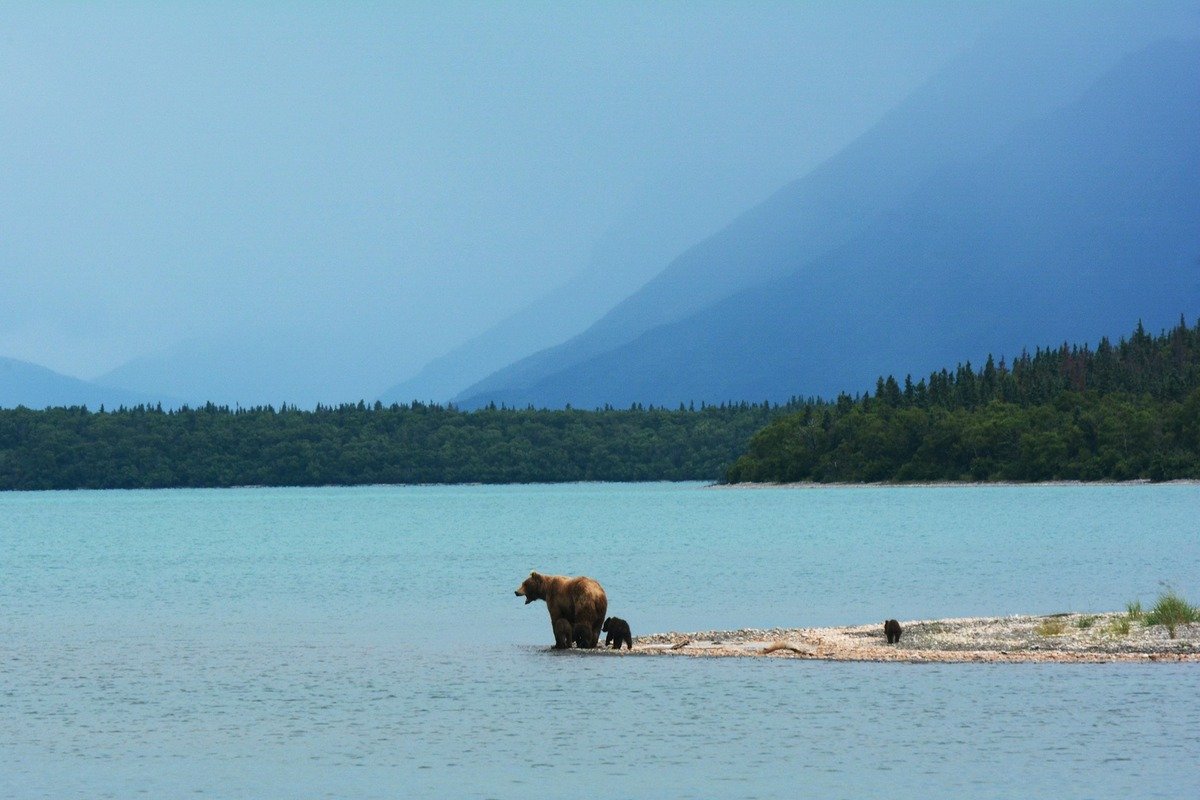
Alaska bear viewing looks different from place to place. You might watch brown bears fish from a platform above a waterfall or scan a coastline where they dig for clams at low tide. The right destination depends on timing, access, and whether bears are the whole trip or one part of it.
Brown bears and grizzlies are the same species. In Alaska, brown bear generally refers to coastal animals and grizzly to inland animals.
When Does Alaska Bear Viewing Get Good?
Summer is the easy answer, but it is too broad to plan a trip around. Bears follow food. Around Chinitna Bay, late spring and early summer bring them into sedge meadows and onto tidal flats to dig for clams. By July, salmon are the draw at Brooks Falls, McNeil River, and streams across Southeast Alaska.
August is harder to generalize. Some coastal and Southeast sites continue drawing bears, while Brooks Camp can slow down. Check that before booking a Katmai bear-viewing trip. Bears often return to parts of the Brooks River in September. Salmon runs, tides, and weather shift each year, so the best Alaska bear viewing season depends on where you are going.
Where Should You Go If Seeing Bears Is the Whole Reason for the Trip?
If seeing bears is the main reason for your Alaska trip, Brooks Camp, Lake Clark, and McNeil River are three places worth considering. Each ranks among the best places to see bears in Alaska, but the experience is quite different depending on where you go.
Is Brooks Falls Still the Place to Start?
Brooks Camp works well for a first bear trip. Every visitor starts with a safety orientation before using the elevated river platforms. Bears fish at the falls in July, while September activity often moves toward the lower river. The Falls Platform holds 40 people, and July crowds may limit visits to one hour.
Would You Rather Watch Bears Along the Coast?
At Chinitna Bay and Silver Salmon Creek, you view bears at ground level, with a guide nearby. Early in the season, bears graze in sedge meadows and dig for clams along the shore. Later, many turn to salmon. Most visitors arrive by small plane, while tides and private-property boundaries affect where groups can land and walk.
Is McNeil River Worth Planning a Year Ahead?
A McNeil River trip starts with the permit lottery, which closes March 1 and awards four-day visits from June through August. ADF&G staff guide each group, but the experience is rugged. Visitors camp on-site, cross mudflats, and may spend six or seven hours watching bears from a small viewing pad.
What Works If Bears Are Only Part of the Trip?
If bear viewing is only one part of your Alaska plans, you have more room to choose a place that fits the rest of the trip.
Where Can You See Bears in Southeast Alaska?
Anan Wildlife Observatory draws black and brown bears to one salmon stream, while Pack Creek offers a remote day trip from Juneau. Both require permits and appear among Alaska’s officially managed bear-viewing sites.
Fish Creek near Hyder is easier to reach by road, although the Forest Service says it’s currently open at limited capacity after flood damage to part of the platform.
Are Kodiak and Denali the Same Kind of Trip?
Kodiak works differently. Roadside bear sightings are uncommon, so the Kodiak National Wildlife Refuge recommends guided trips into remote areas.
In Denali, bears are part of a wider wildlife experience and may be spotted from park buses. The National Park Service’s Denali wildlife guidance covers that experience, while Denali backcountry travel offers another way to experience the park beyond the main road.
Can You Do This Without a Floatplane?
Some bear-viewing trips are possible without flying. Fish Creek is accessible by road, while Denali buses may offer distant sightings. Many of Alaska’s best coastal viewing areas, though, still require a small plane or boat.
Remote trips also come with practical challenges. Weather delays, permit deadlines, muddy landings, limited bathrooms, weak cell service, and hours of walking or standing can all affect the day. For fly-in trips, leave room for delays and use authorized operators.
What Do People Underestimate Around Wild Bears?
Good Alaska bear viewing depends just as much on judgment as location. Bear viewing safety starts with giving bears room, reading the setting, and knowing what to do if an encounter changes quickly.
How Close Is Too Close?
No single statewide viewing distance exists. Brooks Camp uses a 50-yard rule, while Denali requires 300 yards. Always follow the posted limit and any stricter direction from a ranger or guide.
A telephoto lens gives you the reach to photograph bears from a safe distance. Keep your voice low, never block the bear’s path, and give mothers with cubs or bears guarding food extra space.
What If a Bear Notices You?
Running can make the situation worse. Group together, speak calmly, and back away slowly if the bear is not following. If it follows, stop and hold your ground. Do not drop food or your pack.
A defensive brown bear generally wants space. If it makes contact, play dead and protect your neck. If the attack continues, or the bear has been following you as potential prey, fight back. The ADF&G recommends fighting back in nearly all black bear attacks.
Where Does Bear Spray Fit?
Use bear spray only in an emergency. Carry it somewhere you can reach quickly, not buried in a backpack, and never spray it on clothing, tents, or other gear.
Flying with bear spray takes some planning. Most canisters are larger than the FAA’s four-ounce allowance, so they cannot go in checked or carry-on baggage. Before you travel, ask your lodge or air taxi whether it provides bear spray or handles it separately.
Which Bear Trip Actually Fits You?
The best choice depends on the kind of experience you want. Brooks Camp offers the classic falls setting, Lake Clark is known for coastal feeding, and McNeil River takes more planning in advance. Southeast sites fit well into a broader regional trip, while Denali works when bear sightings are part of a bigger wildlife experience.
At Launch Point, we know Alaska bear viewing is only one way to experience the state. You can explore more of our firsthand Alaska adventures, or contact us if you want help planning an Alaska trip that fits how you like to travel.